
Success Story 2025-26
Enhancing Mustard Yield and Profitability Through Improved Production Technologies in Sundargarh District of Odisha
Mustard Cultivation Scenario in Odisha and Sundargarh District in Particular
Mustard (Brassica juncea L.) is one of the most important rabi oilseed crops cultivated over 34.65 thousand ha during the rabi season in Odisha, contributing significantly to edible oil production and the livelihood of small and marginal farmers. The crop is generally grown after the harvest of kharif rice, utilizing the residual soil moisture and the cool, dry weather prevailing during the rabi season (November–February). Mustard is well suited to the agro-climatic conditions of Odisha due to its short duration, low water requirement and adaptability to rainfed farming systems.
Sundargarh district, located in the North Western Plateau Agro-Climatic Zone of Odisha, alone accounts for about 4.88 thousand ha (around 14% of the state's mustard area), reflecting its favourable agro-climatic conditions for mustard cultivation. The crop is predominantly grown after the harvest of kharif rice in the prevalent rice-based cropping systems of the district, offering farmers an opportunity to enhance cropping intensity, improve farm income and utilize fallow lands during the post-monsoon period. The district experiences mild winter temperatures ranging from about 10–28°C, which are conducive for optimum germination, vegetative growth, flowering and seed development. The predominance of well-drained red, lateritic, and sandy loam to loam soils with good aeration supports healthy root growth, while the residual moisture following the monsoon and limited supplemental irrigation provide suitable moisture conditions for the crop. With appropriate varieties and improved production practices, Sundargarh shows considerable potential to increase mustard productivity and strengthen oilseed production in the region.
Journey of Transformation
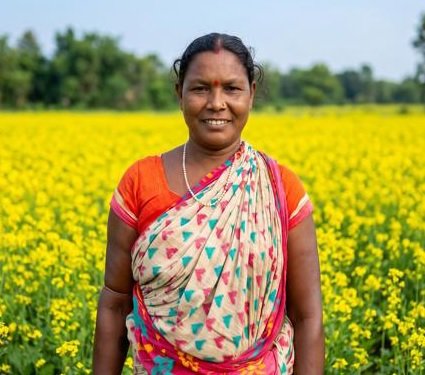
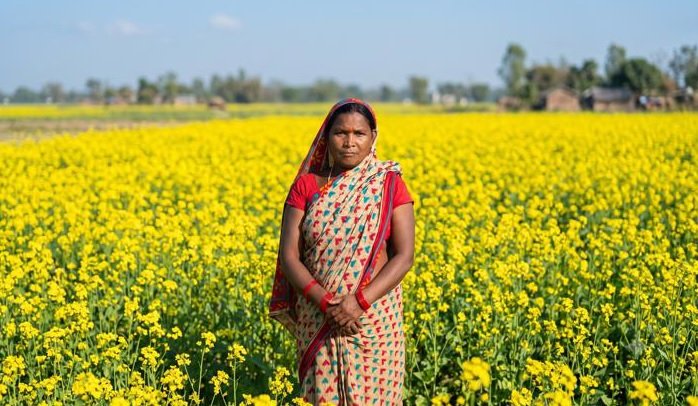
Smt. Tulsi Naik, a progressive farmer from Village Ghantibud, Block Sadar, District Sundargarh, Odisha owns 4 acres of agricultural land. Traditionally she cultivated mustard after kharif paddy using the local toria variety M-27, following conventional farming practices. Under this system, she harvested only 4.5–5.0 q/ha, which limited her income and the profitability of mustard cultivation.
Training and Demonstration on Improved Mustard Production Technologies
During the Rabi season of 2025–26, Smt. Tulsi Naik participated in the Cluster Frontline Demonstration (CFLD) on Oilseeds, a flagship programme of the Indian Council of Agricultural Research (ICAR) supported by the Department of Agriculture & Farmers Welfare (DAF&W), Government of India. Scientists from Krishi Vigyan Kendra (KVK), Sundargarh-I introduced her to the high-yielding mustard variety Sampoorna and provided training and technical guidance on scientific crop production. Sampoorna (ORM 2019-02) is a recently released high-yielding mustard variety developed by the Odisha University of Agriculture and Technology (OUAT), Bhubaneswar and released in 2023 for cultivation in Odisha. It is therefore only about 3 years old variety (as of 2026). The variety possesses a yield potential of about 13.30 q/ha, matures in 110– 115 days, contains approximately 40.3% oil, and is characterized by non-shattering pods and moderate resistance to mustard aphids, making it well suited for rabi cultivation.
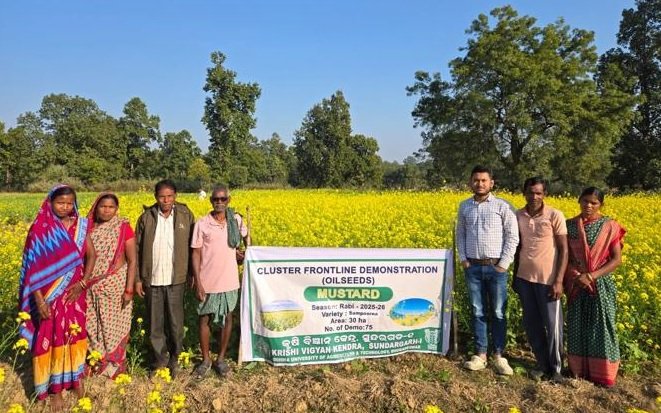
Motivated by the demonstrated potential of the variety, Smt. Tulsi Naik replaced the traditional M-27 variety with Sampoorna and adopted the complete package of recommended practices. These included balanced nutrient management through Integrated Nutrient Management (INM), Integrated Pest Management (IPM), application of essential micronutrients (zinc, boron, and sulphur), effective weed management using Quizalofop-ethyl 5 EC @ 100 ml/ha, and need-based plant protection measures. Continuous technical backstopping and field monitoring by KVK scientists ensured timely implementation of all recommended interventions.
Tangible Impact
The improved variety Sampoorna, coupled with scientific crop management, significantly enhanced mustard productivity. Smt. Tulsi Naik harvested 7.38 q/ha, substantially higher than the traditional variety M-27 yielding 4.70 q/ha. The demonstrated yield also exceeded the district average of 5.10 q/ha and the state average of 4.25 q/ha. Overall, the intervention resulted in a 57.02% increase in yield over the traditional practice, clearly demonstrating the superiority of the improved variety and recommended production technologies. The improved variety and scientific production practices generated significant economic benefits. Net income increased by 83.39%, while the Benefit-Cost (BC) ratio improved to 2.14, indicating higher profitability. The intervention enhanced the productivity and economic viability of mustard cultivation under the rice–mustard cropping system.
Performance of technology vis-à-vis local check in terms of yield and economics
|
Specific Technology |
Yield (q/ha) |
Gross cost (Rs/ha) |
Gross income (Rs/ha) |
Net income (Rs/ha |
BC ratio |
|
Farmer practices |
4.70 |
17200 |
27965 |
12765 |
1.62 |
|
Demonstration |
7.38 |
20500 |
43911 |
23411 |
2.14 |
|
% Increase |
57.02 |
19.18 |
57.02 |
83.39 |
32.09 |
Intangible Impact
Beyond the measurable economic gains, the demonstration strengthened the farmer's confidence in adopting improved technologies and reinforced her trust in scientific recommendations provided by KVK. Tempted by the remarkable success and higher economic returns achieved from the demonstration plot, more than 20 neighboring farmers in Ghantibud village and nearby areas have started the high-yielding mustard variety Sampoorna along with the recommended scientific management practices during the subsequent season, expanding mustard cultivation over an additional 20–25 ha. The demonstration also highlighted the importance of balanced nutrient management, timely weed control, and integrated crop management in improving oilseed productivity in the region.
Success Beyond the Demonstration
The journey of Smt. Tulsi Naik reflects how scientific interventions can transform the productivity and profitability of smallholder farming. The substantial increase in productivity and profitability not only improved her household income, but also established her as a role model for mustard cultivation in the village. Her success demonstrates that the use of improved variety, supported by scientific crop management and continuous extension services can significantly enhance mustard production and contribute to the livelihood security of farming families in Sundargarh district.